Author: Artur Bonkowicz
How to wash car windows without leaving streaks?
More

The cleanliness of your windows is crucial for driving safety and comfort. Road deposits, insect residues and greasy smears reduce visibility, which becomes particularly dangerous after dark and during rainfall. Standard washing is often insufficient to effectively remove the persistent road film that builds up on glass surfaces. Professional preparation of glass requires dedicated chemicals capable of removing both organic and mineral contamination.
Carrying out this process effectively requires working on a perfectly clean surface to avoid grinding sand particles into the glass. Begin by removing loose dirt using a Traffic Film Remover such as CITRINE, or active foam CARNELIAN. Only after rinsing off the pre-wash chemicals should you proceed with the main two-bucket car wash using TOURMALINE shampoo or the acidic ALEXANDRITE. This sequence eliminates road film that could otherwise limit the effectiveness of the degreaser.
Proper degreasing takes place on a dried vehicle. The key step is using pure isopropyl alcohol, found in the AVENTURINE product. Apply a small amount directly to a clean microfibre cloth and wipe the glass thoroughly. The alcohol evaporates almost instantly, leaving the surface sterile and completely free of greasy smears, completing the glass preparation process.

The choice of product should depend on the type of contamination and the desired result. For everyday removal of greasy deposits, MALACHITE is an excellent option. It is a highly efficient glass cleaner that evaporates instantly without leaving any streaks. Its advanced formula effectively dissolves stubborn mineral deposits and road film, restoring crystal clarity to surfaces – essential for your safety.
When preparing glass for the application of protective coatings, choose a professional degreaser – the key to achieving full durability and a hydrophobic effect. AVENTURINE, based on high-concentration isopropyl alcohol, instantly eliminates even the most stubborn greasy deposits. It creates a perfectly sterile surface – the essential foundation for the lasting adhesion of hydrophobic coatings and achieving the full “invisible wiper” effect.
It is also worth paying attention to the problem of hard water. White spots on car glass often appear that ordinary alcohol simply cannot remove. In such cases, use LAZURITE, which instantly dissolves mineral deposits. This acidic product restores perfect smoothness and clarity to the surface.
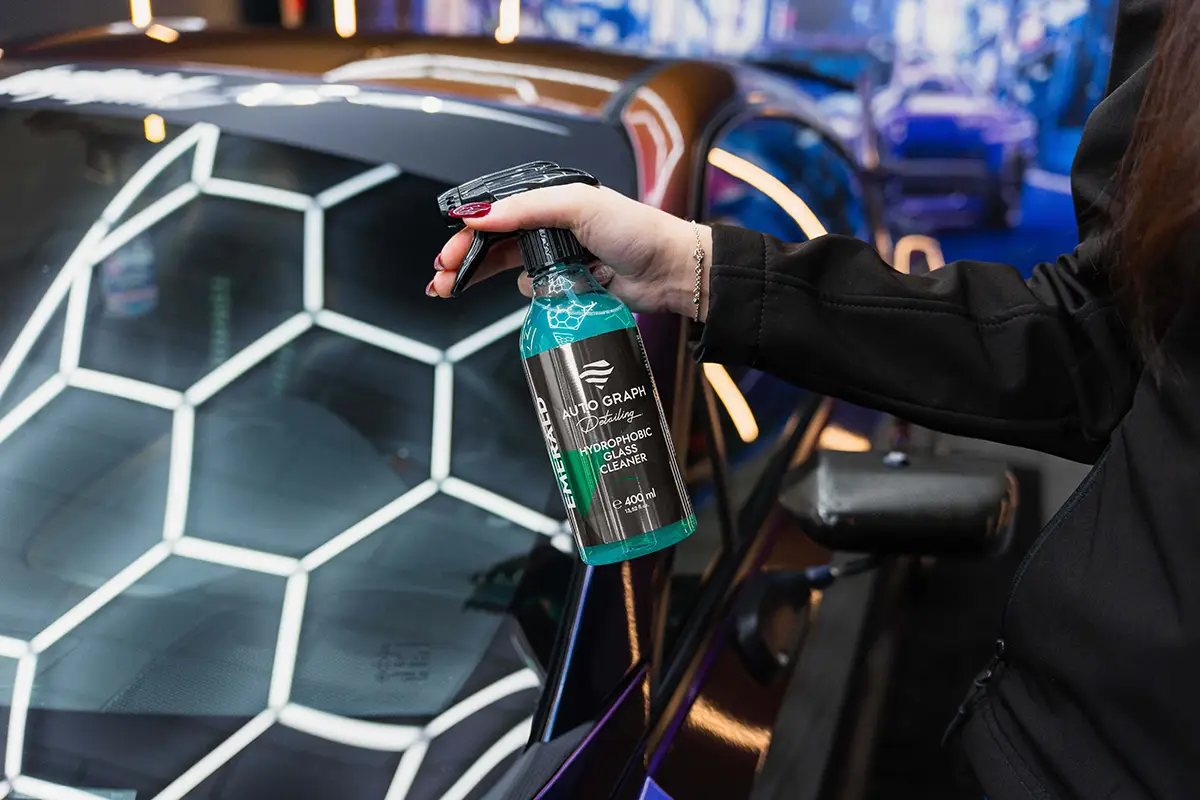
After thoroughly cleaning the windows, it is worth considering hydrophobic treatment. EMERALD contains SiO2 polymers that create a durable hydrophobic barrier. With proper glass preparation, the “invisible wiper” effect becomes so powerful that airflow alone removes raindrops, significantly improving driving comfort and visibility.
Many drivers look for alternatives to professional products, turning to washing-up liquid or vinegar. However, these solutions carry significant risks for rubber components and seals. Washing-up liquid can leave phosphate residues that make it difficult to achieve perfect clarity. Vinegar, on the other hand, has an irritating smell and over time accelerates corrosion of metal window frames.
When it comes to degreasing car windows from the inside, home remedies rarely match the performance of dedicated chemicals. Homemade mixtures seldom cope with tobacco smoke film. Professional MALACHITE has been designed to evaporate rapidly inside a closed car interior, helping you avoid the stubborn streaks that show up against sunlight.
It is worth investing in trusted glass care products to save time and effort. What is the best product for degreasing windows? The answer is pure isopropyl alcohol or products containing it, such as AVENTURINE. It guarantees that the surface is sterile and ready for the next stages of care.
The key to perfectly degreased glass is precise microfibre technique. Use the cross method: first wipe the surface vertically (top to bottom), then horizontally (left to right). This system ensures that the product reaches every part of the glass structure and is spread evenly. Remember the two-cloth rule: use the first cloth to apply the product and lift contamination, then use a second clean, dry cloth to buff to a final crystal-clear, streak-free finish.
Make sure to thoroughly clean the edges around the rubber seals – this is where the most stubborn dirt accumulates. If you skip this step, you can easily transfer deposits back onto the already clean glass surface when working with a microfibre cloth, creating unsightly secondary soiling. Avoid this problem by first carefully cleaning the edges with a brush and AMBER APC. Always remember to dilute this product before use and rinse it off the surface thoroughly.
The last but equally important step is to take care of the wiper blades. It is often on their rubber elements that an oily film accumulates, which transfers contamination back onto the glass with every wipe, undoing all your hard work. Wipe them gently with a microfibre cloth dampened with MALACHITE or AVENTURINE. This will ensure that visibility in your car remains at the highest level for a long time.
If you want to take comprehensive care of your vehicle, explore our professional car wash cosmetics. Choosing products designed with specific surfaces in mind is the most direct route to restoring your car’s showroom shine and protecting it against the harmful effects of external factors.

Published: