Author: Monika Stefaniak
How and What to Use to Degrease Car Windows?
More
Optimal visibility is crucial for road safety. However, even after carefully washing your vehicle, stubborn mineral deposits often remain on the glass. This is a direct result of hard water evaporating and leaving behind a residue that is difficult to remove. Minerals crystallise on the surface, forming a tough crust. Many drivers underestimate this problem, unknowingly exposing their windows to permanent surface degradation and haziness. We explain the mechanism behind the formation of these deposits and present proven methods for eliminating them effectively.
Tap water has a high calcium and magnesium content, which becomes problematic when droplets left on the bodywork dry in the sun or from engine heat. As the water evaporates, minerals are deposited on the surface, forming the characteristic white spots on car glass known in detailing as water spots. Their hardness far exceeds the resistance of standard road contaminants, which is why ordinary screen wash fluid is unable to dissolve such durable crystalline structures.
The surface degradation process intensifies under high temperatures, when sunlight fixes the mineral compounds, leading to a loss of glass smoothness. Once a white film on car glass becomes firmly bonded to the surface, it permanently reduces clarity. Removing it then requires professional mechanical polishing using cerium oxide, which is why prompt intervention helps avoid such advanced and costly restoration work.
The key to effective maintenance is understanding the chemistry of mineral deposit formation: they have an alkaline reaction, which means neutral-pH shampoos remain ineffective. This is precisely why unsightly smears on the windscreen often appear immediately after a visit to a contactless car wash, where the water is not always fully demineralised. Micro-droplets remaining on the surface evaporate almost instantly during driving, creating persistent stains on the glass that are difficult to remove using standard methods.
Effective removal of mineral deposits is based on the principle of chemical neutralisation – since they have an alkaline reaction, acidic products are required to dissolve them. It is essential, however, to use dedicated products that are fully safe for paintwork and rubber seals. Home remedies such as vinegar solution should be avoided, as its aggressive action can lead to drying out and degradation of rubber components.
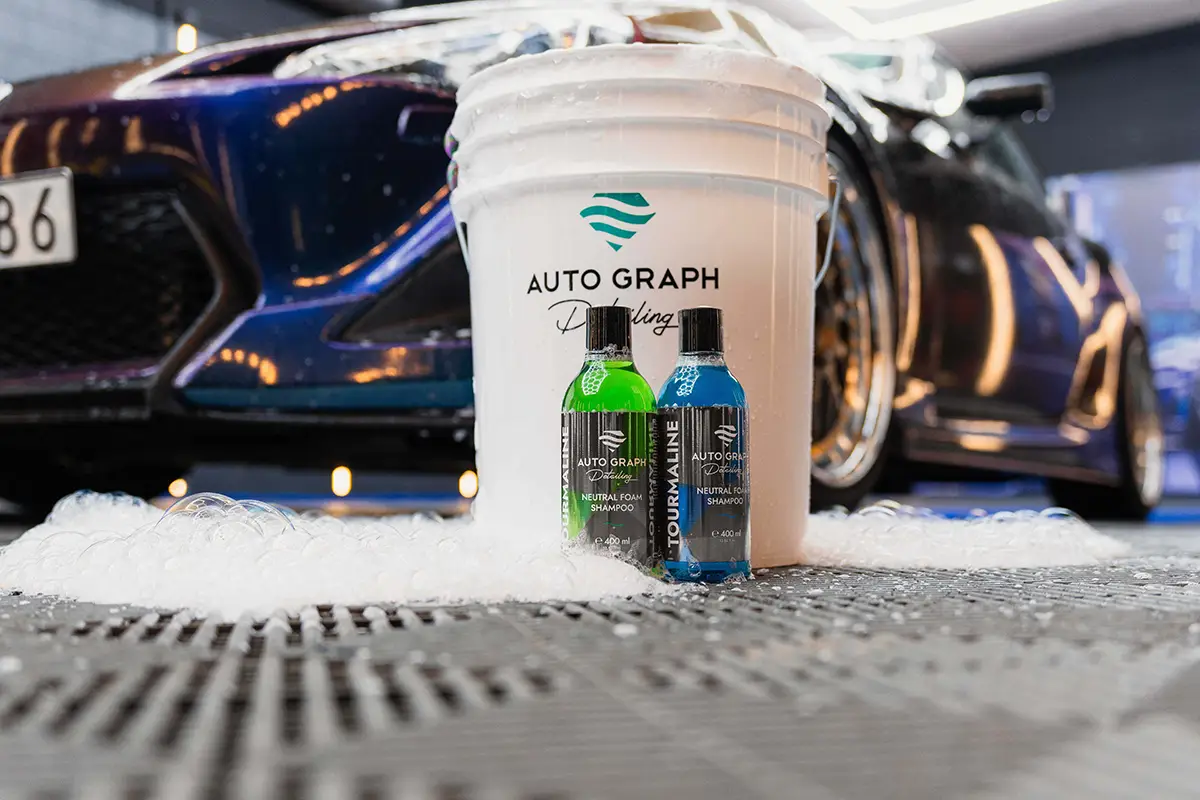
Professional car care products, such as TOURMALINE and ALEXANDRITE shampoos or CARNELIAN foam, contain corrosion inhibitors that protect the paintwork. LAZURITE WATER SPOT REMOVER, on the other hand, is a product dedicated to removing hard water stains. Its acidic pH instantly breaks down mineral bonds. It is a specialist product that works within seconds, dissolving deposits and restoring smoothness to the surface. LAZURITE also unclog protective coatings, restoring their hydrophobic properties.
For lighter soiling, an acidic shampoo can be helpful. ALEXANDRITE Organic Acid Shampoo aids in removing mineral deposits as early as the pre-wash stage. It creates a dense foam and provides lubrication, minimising the risk of scratching. Regular use of an acidic shampoo prevents the accumulation of deposits. In situations where limescale on car glass is already heavily set and layered, a concentrated Water Spot Remover (WSR) becomes necessary.
A well-chosen glass deposit remover will also tackle greasy road film. MALACHITE Glass Cleaner removes not only mineral deposits but also stubborn greasy contaminants. Its formula evaporates quickly without leaving streaks. It is a ready-to-use product, ideal for the final finishing of glass after demineralisation. (Note: MALACHITE handles fresh hard water deposits; without an acidic pH, it will not be effective against old, heavily set deposits.)

Removing limescale from car windows requires precision and adherence to detailing best practice. The safety of the glass surface and surrounding components is the top priority. We present a procedure that eliminates water stains on car glass without the risk of damage.
Begin by thoroughly washing the vehicle. Road dirt masks deposits and hinders the effectiveness of chemicals. We recommend two-bucket car washing with grit guards, which removes loose sand particles. The surface must be clean and, most importantly, cool. Applying acids to warm glass leads to irreversible damage. Position the car in the shade before starting.
Carry out the proper removal of limescale from car glass using LAZURITE. Spray the product directly onto the cool glass or onto a microfibre cloth. Work in small sections to maintain control over the product. Spread it evenly, not allowing it to dry out. The acid needs time to react, but if it dries it risks causing etching.
Observe how the chemical behaves. The deposit should visibly dissolve before your eyes. For thick layers of scale, the process can be repeated. LAZURITE effectively removes film from car glass, revealing a crystal-clear surface. Always remember to wear protective gloves when working with acidic chemicals.
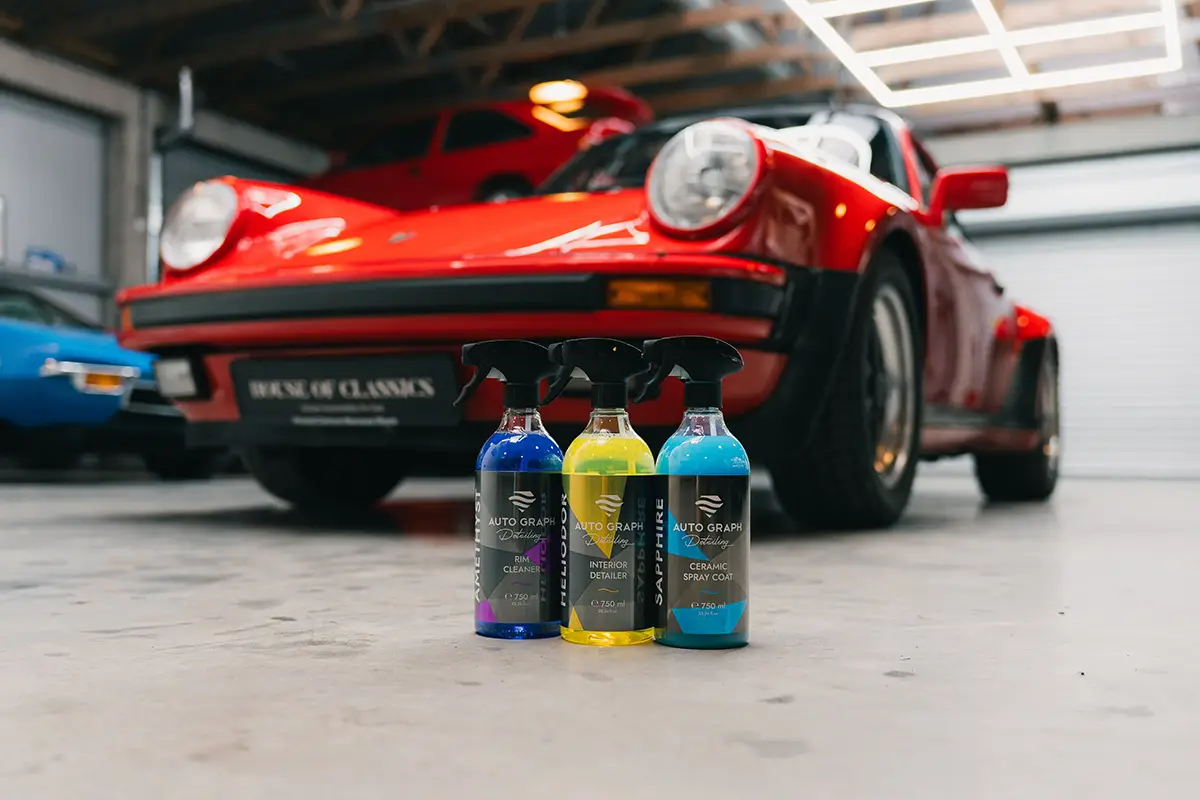
Removing the scale is only half the job. The surface must be prepared for a protective coating. This is where degreasing the car glass is essential. Use AVENTURINE IPA Cleaner, which contains 99% isopropyl alcohol. It removes chemical residues and degrease the glass, preparing it to accept a coating. The product evaporates quickly and requires no laborious buffing.
After degreasing, inspect the glass for streaks under an inspection light. Clean glass should not refract light. If you notice streaks on the car windscreen, apply MALACHITE glass cleaner once more. Its antistatic properties will slow down the re-settling of dust. Good glass care products guarantee perfect clarity.
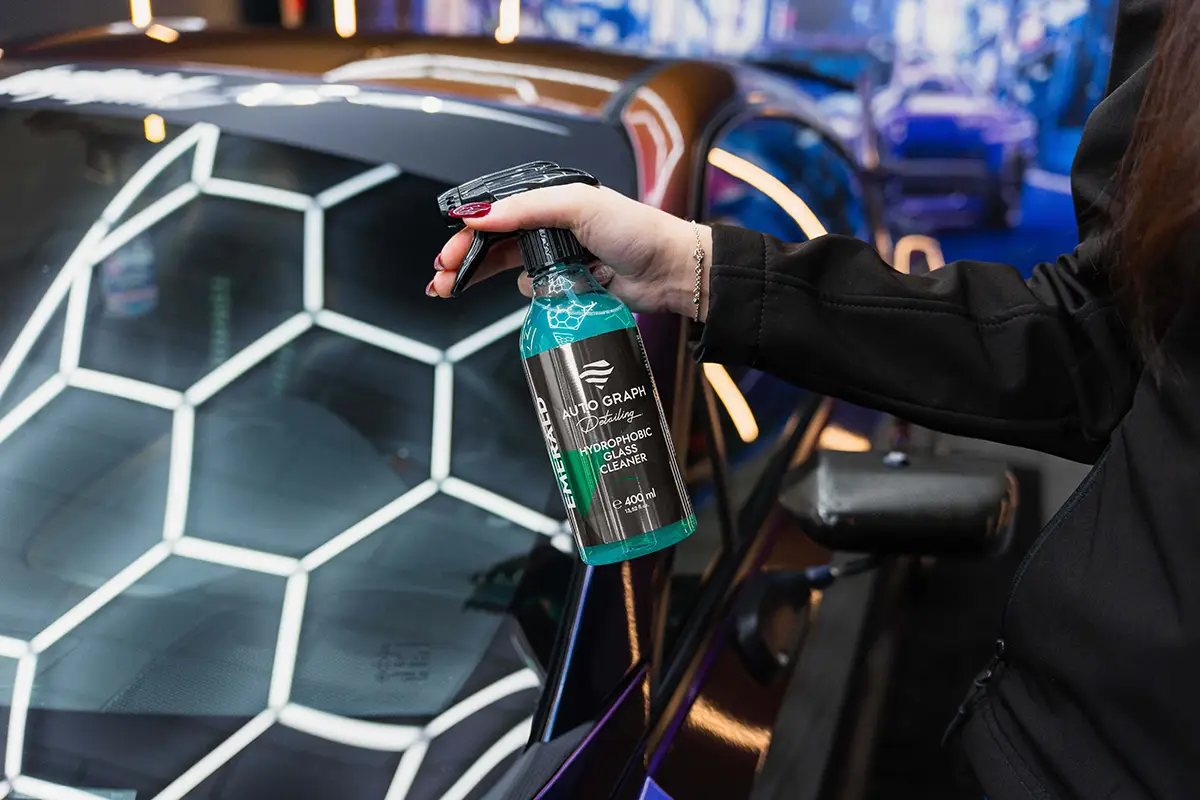
Clean glass is susceptible to mineral re-deposition. It must be protected with a hydrophobic coating. EMERALD Hydrophobic Glass Cleaner acts like an invisible wiper. It contains SiO2, the main component of ceramic coatings, and creates a layer that repels water and dirt.
Applying EMERALD is straightforward. Apply the liquid using a cross pattern – top to bottom and left to right – to ensure even coverage. Then buff the surface with a clean microfibre cloth using circular motions. As a result, rainwater runs off the glass on its own, carrying minerals with it, which significantly hinders the formation of new water spots.
By knowing how to remove water stains from glass and how to properly protect the surface afterwards, you ensure impeccable visibility and maximum driving comfort even on rainy days. Regular maintenance with acidic products and the use of an invisible wiper coating are the standard in modern car care. The right chemicals save your time and protect your glass from hazing.
What to use to remove limescale from car glass depends on the severity of the contamination – your decision will be between a regular shampoo and a stronger, dedicated remover, matching the strength of the product to the condition of the surface.

Published: